
What Is Feminine Energy — And Why Logic Alone Won’t Get You There
You’ve probably heard the phrase. Maybe it made you curious. Maybe it made you roll your eyes a little. Maybe both.
Feminine energy. It sounds soft. Possibly vague. The kind of thing that gets said in wellness circles alongside words like flow and alignment and other things that are easy to nod at and hard to actually do.
But here’s the thing — if you’ve ever felt like you were running on the wrong fuel. If you’ve ever done everything right and still felt off. If you’ve built a life that makes sense on paper and yet something in you keeps asking is this it? — you’ve already felt the gap that feminine energy describes.
This isn’t about personality types or gender roles. It’s about something older and more fundamental than that. And it’s worth understanding — not because it will fix everything, but because it might finally name something you’ve been trying to articulate for years.
What Feminine Energy Actually Is
Let’s start by clearing away what it isn’t.
Feminine energy is not the same as being emotional, passive, or soft-spoken. It’s not a trait you either have or don’t. It’s not something you access by wearing certain clothes or diffusing the right oil or speaking more quietly in meetings.
And it has nothing to do with being less.
Feminine energy is a mode of being — one that is receptive rather than driven, cyclic rather than linear, felt rather than reasoned. It’s the part of you that knows something before you can explain why. That senses the temperature of a room before anyone speaks. That needs beauty, rhythm, and meaning the way the body needs water.
Every human being carries both feminine and masculine energy — regardless of gender. Masculine energy moves outward: it plans, executes, protects, achieves. Feminine energy moves inward: it receives, feels, creates, restores. Neither is better. Both are necessary.
The problem isn’t that one exists and the other doesn’t. The problem is that most women in modern life have been running almost entirely on masculine energy for years — and the tank is showing it.
How It Gets Suppressed
This didn’t happen by accident.
The world most women have grown up in rewards output. It rewards efficiency, consistency, measurable results. It celebrates the woman who does more, needs less, and never lets anything show. It gives gold stars to the one who is always available, always capable, always composed.
These aren’t bad qualities. But they’re almost entirely masculine in their orientation. And when they become the only mode available — when there is no room for rest, for receiving, for not knowing, for moving with feeling rather than against it — something starts to compress.
The body holds it first. Tension that doesn’t release. Sleep that doesn’t restore. A low-grade restlessness that no amount of productivity can resolve. Then it moves into the emotional body — a flatness, a disconnection, a sense of going through motions without really inhabiting them.
Then comes the question that’s hard to admit out loud: Why does none of this feel like enough?
The answer, more often than not, is not that you need to do more. It’s that you’ve been doing in a way that leaves no room for being.
The Logic Trap
Here’s where it gets interesting — and a little uncomfortable.
Most high-functioning women approach the problem of disconnection the same way they approach every other problem: with logic. They research. They optimize. They find the right routine, the right framework, the right five steps to feeling better. They add things to their schedule. They measure their sleep. They track their moods.
And they feel approximately the same.
Not because those things don’t matter. But because the part of you that is disconnected doesn’t respond to systems. It responds to sensation. To permission. To the slow, deliberate act of letting yourself feel something without immediately managing it.
Feminine energy cannot be optimized into existence. It can only be allowed.
That’s a genuinely difficult concept for a woman who has spent years being good at figuring things out. It requires a different kind of intelligence — not less rigorous, but differently oriented. Softer in its attention. More willing to not-know. More trusting of what is felt over what is calculated.
This is not weakness. This is a skill most women have been actively trained away from.
What It Feels Like When It’s Present
You’ve felt it before — even if you didn’t have a name for it.
It’s the afternoon when you weren’t trying to accomplish anything and something in you finally exhaled. The conversation that went somewhere real and left you feeling more alive than tired. The moment in nature, or music, or the right scent, when time briefly stopped mattering and you were simply here.
It’s the version of yourself that moves slowly enough to notice things. That makes decisions from the gut and trusts them. That doesn’t apologize for needing beauty, or rest, or depth, or connection.
It’s the you that exists underneath the roles and the performance and the competence — the one who knows things without being able to explain them. The one who hasn’t disappeared, even if she’s been quiet for a while.
That’s feminine energy. Not a concept. A lived experience of being fully in your body, fully present, and fully yourself.
Why Scent Is One of the Fastest Paths Back
Of all the ways to access the body and the feeling-self, scent is one of the most direct.
This isn’t mysticism — it’s neuroscience. The olfactory system has a direct connection to the limbic brain, the part that governs emotion, memory, and instinct. A fragrance bypasses the thinking mind entirely and lands somewhere older and more immediate. Before you’ve formed an opinion, you’ve already felt something.
This is why scent has been used across cultures and centuries as a ritual tool — not decoration, but doorway. A way of signaling to the nervous system: this moment is different. You are allowed to be here. You can stop performing now.
The right scent at the right moment doesn’t just smell good. It unlocks something. A memory of who you were before you got so busy being everything to everyone. A sensation of being in your body rather than above it. A quiet recognition: this is me.
That’s not indulgence. That’s intelligence — the kind that lives in the body, not the spreadsheet.
How to Begin Reconnecting
You don’t need a retreat. You don’t need a month off. You don’t need to have everything figured out before you start.
You need one small, deliberate act of turning toward yourself.
Start with sensation. What do you actually enjoy? Not what’s good for you — what feels good to you. Taste, texture, smell, sound, temperature. Begin to notice your own preferences as if they matter. Because they do.
Create a transition. Feminine energy doesn’t arrive while you’re sprinting. Build a small ritual that signals the shift from doing to being. It doesn’t need to be elaborate — a candle, a scent, a five-minute pause. The content matters less than the consistency of the signal.
Practice receiving. Let something be given to you without deflecting it. A compliment. A moment of beauty. A gesture of care. Notice how uncomfortable that might be — and stay with it anyway.
Follow what pulls you. Not what should interest you. Not what’s productive. What actually pulls at your attention, your desire, your curiosity. That pull is information. It’s feminine energy navigating.
None of this requires a dramatic shift in your life. It requires a subtle but significant shift in your attention — from outward to inward, from doing to feeling, from managing to allowing.
You Don’t Have to Earn This
The most persistent myth about feminine energy is that it’s a reward for when everything else is handled. When the work is done. When the obligations are met. When you’ve finally earned a moment to yourself.
That’s not how it works. And waiting for that moment means waiting indefinitely.
You don’t access your feminine energy when life gets quieter. You bring it with you into the life you already have. You make space for it in the middle of the ordinary — not instead of your responsibilities, but alongside them.
This is what it means to say yes to yourself first. Not last. Not eventually. First.
Not because your needs are more important than everyone else’s. But because you cannot give from a place that’s running on empty — and the world that benefits most from your presence is the one that gets the version of you who is actually here.
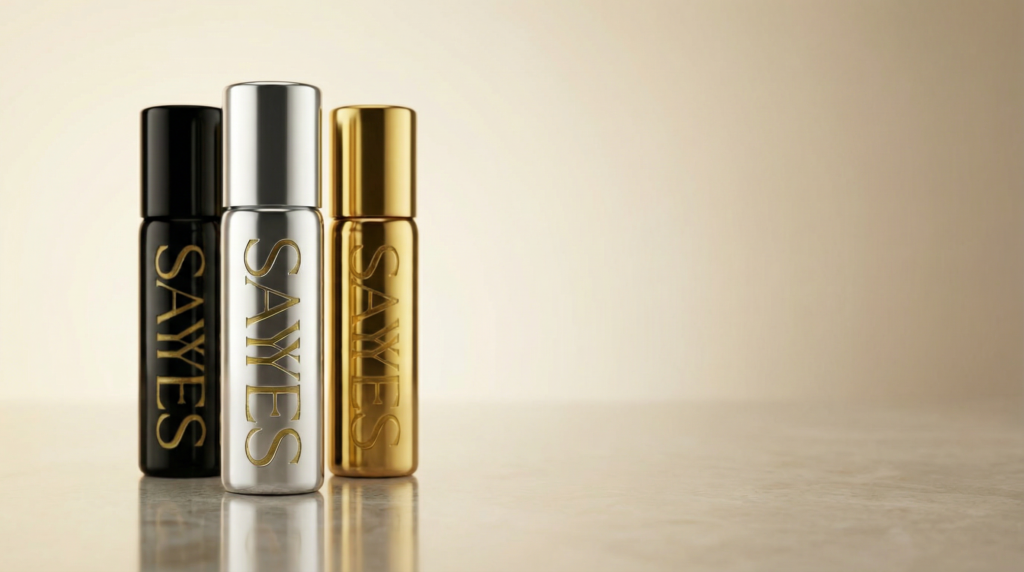
At SayYes, we believe feminine energy isn’t something you find. It’s something you return to. Our rituals, scents, and tools are designed to help you make that return — one deliberate, embodied moment at a time.
Start with something that calls to you. That’s always the right place to begin.